


Tummy Tuck Surgery
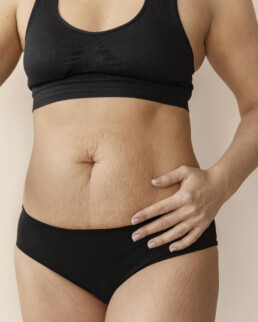
Abdominoplasty is a surgical procedure aimed at restoring a firm, flat and toned abdomen by removing excess skin and fat and correcting the abdominal musculature where necessary.
It is important to note that abdominoplasty is not a weight loss treatment. It is indicated for patients with a stable and healthy weight, and aims to improve the shape, firmness and proportion of the abdomen, not to replace eating habits or exercise.
Abdominoplasty is recommended in cases where the abdomen has lost firmness, elasticity or structure. Abdominoplasty is recommended in cases where the abdomen has lost firmness, elasticity or structure. Among the most common situations are: Among the most common situations are:
-
- Excess skin and abdominal flaccidity.
- Diastasis recti (bulging abdomen even in slim patients).
- Stretch marks located in the lower abdomen.
- Fat accumulation resistant to diet and exercise.
- Post-pregnancy changes or major weight loss.
- The possibility of correcting umbilical or middle hernias in the same procedure.
A personalised abdominoplasty for you
At HC Aesthetic, abdominoplasty is always planned in a personalised way, adapting the technique to the anatomy, goals and lifestyle of each patient. In the first consultation (free of charge) we review your medical history and perform a complete assessment, which includes:
Evaluation of skin quality, accumulated fat and muscle condition.
Waist and flank assessment to decide whether to combine with liposuction.
Discussion of the most appropriate type of abdominoplasty.
Types of abdominoplasty surgery
Depending on the patient’s specific needs, there are three surgical approaches to abdominoplasty.
Full
Removes excess skin and fat from the navel to the pubic area, repositions the navel in a natural position and strengthens the abdominal musculature in cases of diastasis. It also makes it possible to correct hernias and improve or eliminate previous scars.
Mini abdominoplasty
Mini abdominoplasty is indicated when flaccidity is limited to the lower abdomen. It does not require repositioning of the navel and offers a faster recovery compared to other techniques.
Extended
Also known as belt abdominoplasty, it is recommended for patients with excess skin and fat that extends to the flanks and lower back, and is especially indicated after massive weight loss.
What to expect after abdominoplasty surgery
After abdominoplasty, the recovery process, the possible risks and the progression of the results are a natural part of the treatment.
The postoperative period is planned to ensure a safe and comfortable recovery, with guidelines that facilitate a gradual return to daily life and optimise the final result of the surgery.
-
- Hospital stay: 24-48 hours.
- Discomfort: controlled with analgesia.
- Walking: from the first few hours, gently and slightly bent forward.
- Drains: generally removed after a few days, depending on progress.
- Postoperative massages: recommended to promote lymphatic drainage, reduce swelling and optimise the final result.
- Return to work: within 2-4 weeks, depending on the type of surgery.
- Physical activity: avoid strenuous exercise for 6-8 weeks.
- Abdominal binder: should be worn during the first month.
From the immediate postoperative period, we focus on the care and treatment of the scar to promote optimal recovery. In abdominoplasty we can use two types of scars:
-
- Low horizontal incision: usually from hip to hip, designed to be concealed below the underwear or swimwear.
- The mini-T incision: allows the scar to be kept low and the abdominal contour to be optimised in selected cases.
If the patient has a previous caesarean scar, this can usually be improved or even replaced with a more aesthetic one during the operation.
Although rare, abdominoplasty surgery may present:
-
- Haematomas or seromas.
- Temporary changes in the sensation of the abdominal skin.
- More visible scars than usual.
- Delayed healing in specific areas.
After the surgery, the following results can be noticed:
-
- A flatter, firmer and more toned abdomen.
- Improved posture and reduction of lumbar discomfort in cases of diastasis.
- A slimmer and more harmonious silhouette, especially when combined with liposuction.
- In panniculectomy, immediate improvement in mobility, hygiene and daily comfort.
Combined liposuction: an enhancement for the final result
In many cases we combine abdominoplasty with liposuction of the waist, flanks or upper abdomen, which allows for improved definition of the silhouette and a more harmonious result. At HC Aesthetic we use technologies such as VASER or MicroAire (subject to availability) for a more precise contouring.
Panniculectomy
In some patients, especially after massive weight loss or in cases of morbid obesity, excess skin and fatty tissue in the lower abdomen can form a large abdominal apron (pannus). This excess not only impairs aesthetics, but also limits mobility, makes hygiene difficult and promotes skin problems such as dermatitis, fungal infections or chronic wounds in the folds.
Panniculectomy is a surgery aimed exclusively at eliminating this abdominal apron, improving the patient’s quality of life.
Unlike abdominoplasty, this intervention does not include plication of the abdominal musculature or repositioning of the navel. Its primary goal is functional, although a favourable aesthetic result is often obtained as well.
Furthermore, it may be indicated even in patients who are not yet candidates for a full abdominoplasty due to their weight or health conditions.
Indications for panniculectomy
-
- Large excess of overhanging skin and fat.
- Hygiene problems or skin lesions in the abdominal fold.
- Reduced incidence of skin infections and lesions.
Benefits of panniculectomy
-
- Relief of physical discomfort.
- Greater ease with dressing and movement.
- Reduced incidence of skin infections and lesions.
Take the next step toward your best self.
Every transformation begins with a decision. Give yourself the care you deserve and discover how science, innovation, and personalised attention can enhance your well-being.
Frequently asked questions about abdominoplasty
For your peace of mind, here are the answers to the most common questions we receive at our Marbella clinic, helping you to resolve the main doubts and to better understand each stage of your transformation:
To ensure optimal results, it is recommended to wait between 6 and 12 months after childbirth. It is essential that the body has regained its stable weight and, if you have chosen to breastfeed, to wait at least 6 months after finishing breastfeeding. This enables the abdominal tissues and skin elasticity to stabilise and hormone levels to return to normal before the abdominoplasty.
It is important to clarify that an abdominoplasty is not a treatment for obesity or a weight loss method. Although excess skin and localised fat (panniculus adiposus) are removed, the measurable weight loss is minimal.
The real benefit is the remodelling of the body contouring, which results in a flatter abdomen and a more defined waistline that cannot be achieved by diet or exercise alone.
Yes, the surgery does not affect the reproductive capacity or the development of the baby.
However, specialists recommend undergoing abdominal dermolipectomy when you are no longer planning to become pregnant in the future. A subsequent pregnancy would stretch the muscles (rectus diastasis) and the skin again, which could compromise or reverse the aesthetic results achieved with the operation.
With the HC seal
Every detail reflects our commitment to excellence, safety and professionalism. At HC Aesthetic, our exclusive and personalised care transforms each treatment into a unique experience.